Alaska Wildlife on Land & Sea
Lodges & Adventure Wildlife & Bear Viewing Alaska Cruise Tours Alaska Railroad Tour Packages Alaska In Winter Day Excursions & Activities Driving Packages Escorted Groups Arctic Cultural Fishing Alaska


Alaska Wildlife Viewing
Bears, Whales and more!

Alaska Cruises from Alaskatours.com

Wildlife viewing in Alaska includes an amazing array of birds, whales, bears, moose, musk ox and more.

Experience Alaska's wildlife first hand on a day trip or overnight stay at one of several selected lodges in or near Alaska's spectacular National Parks. 

Denali National Park

Glacier Bay National Park

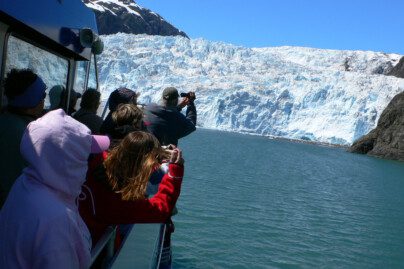
Kenai Fjords National Park


Information about the Wildlife of Alaska

Click for wildlife Viewing Tours

Bears Viewing

Black bears occur over most of the forested areas of Alaska except the Seward Peninsula, on the Yukon-Kuskokwim Delta, or north of the Brooks Range. Black is the most often encountered color, but brown or cinnamon bears are often seen in south-central Alaska and the southeastern mainland.

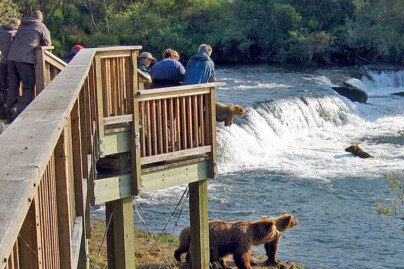
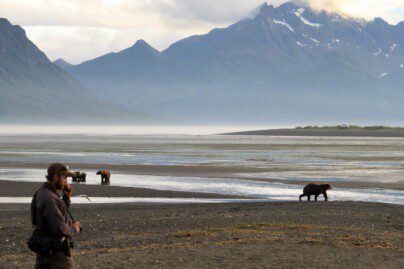
Brown / Grizzly bears occur throughout Alaska except on the islands south of Frederick Sound in southeastern Alaska, the islands west of Unimak in the Aleutian Chain, and the islands of the Bering Sea. The term “brown bear” is commonly used to refer to the members of this species found in coastal areas where salmon is the primary food source. Brown bears found inland are often called “grizzlies.”

Polar bears and brown bears evolved from a common ancestor and are still closely related.  Their white color is a result of the remote arctic environment and they inhabit the northern hemisphere, nearly always in association with sea ice.  Due to their remote habitat, Polar bear are not frequently seen by visitors to Alaska.

Whale Watching

Beluga whales belong to the group known as toothed whales which also includes sperm whales, killer whales, dolphins, and porpoises. The common name is derived from the Russian word for white. Belugas range widely in arctic and subarctic waters and are often seen in Cook Inlet near Anchorage.

Humpback whales are a baleen whale most frequently seen swimming or feeding close to shore along the southern coast of Alaska.  They tend to concentrate in several specific areas including Southeast Alaska, Prince William Sound, the area near Kodiak and the Barren Islands. Whales that summer in Alaska are primarily from the Hawaii Islands.

Orca (Killer whale) is the largest member of the group of marine mammals known as dolphins and are found throughout the marine waters of Alaska. Orca are commonly see from Southeast Alaska through the Aleutian Islands and northward into the Chukchi and Beaufort seas

Marine Mammals

Sea Otters are members of the weasel family and are related to mink and river otters. They live in shallow waters along the shores of the North Pacific. Their fur, which is possibly the finest in the world, consists of a very dense underfur of inch-long fibers and sparse guard hairs.  Unlike seals, which rely on a heavy layer of blubber for protection against the cold North Pacific waters, sea otters depend on air trapped in their fur for maintaining body temperature.

Steller Sea Lions are the largest member of the  "eared seal" family. Sea lions differ from hair seals (harbor seals, ringed seals, ribbon seals, bearded seals, and spotted seals) in that sea lions have external ears and rear flippers which turn forward allowing them to "walk" with a gait similar to land mammals. They are called sea lions because they resemble the terrestrial lion of Africa and Asia.

Walrus are members of a widely distributed group of marine animals known as pinnipeds (pinna, a wing or fin; and pedis, a foot), that includes seals and sea lions. Walruses are the largest pinnipeds in arctic and subarctic seas. and are  most commonly found in relatively shallow water areas, close to ice or land. Their geographic range completely encircles the Polar Basin, including the Bering Sea.

Land Mammals

Dall Sheep inhabit the mountain ranges of Alaska. The are found in relatively dry country and frequent a special combination of open alpine ridges, meadows, and steep slopes with extremely rugged "escape terrain" in the immediate vicinity. They use the ridges, meadows, and steep slopes for feeding and resting.

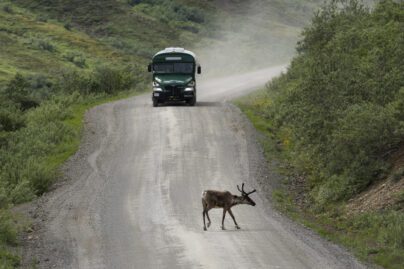
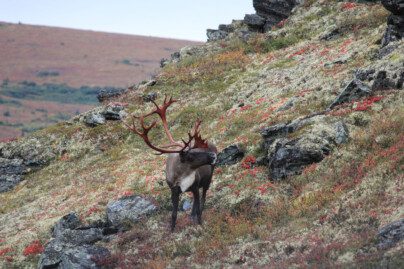
Caribou live in the arctic tundra, mountain tundra, . There are 32 herds in Alaska . A herd uses a calving area that is separate from the calving areas of other herds, but different herds may mix together on winter ranges. Caribou are the only member of the deer family in which both sexes grow antlers.

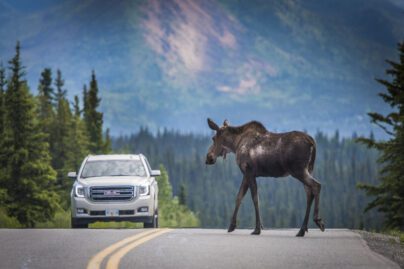
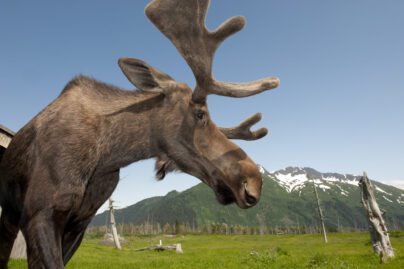
Moose is the world's largest member of the deer family. The Alaska race is the largest of all the moose and live in suitable habitat from the Stikine River near Wrangell to the Colville River on the Arctic Slope. They are most abundant in recently burned areas that contain willow and birch shrubs, on timberline plateaus, and along the major rivers of Southcentral and Interior Alaska.

Muskox is called omingmak meaning “the animal with skin like a beard” by Inupiaq-speaking Eskimos, a reference to the long guard hair that hangs nearly to the ground. Taxonomists now classify muskoxen with the sheep and goats. The closest living relative of the muskox is the takin, a large goat-like animal which is found in the Himalayas. Muskoxen as a species have changed little since the ice age and are perfectly adapted to live in their harsh arctic environment.

Birds

Alaska is home to a huge variety of birds – 471 species have been positively identified to date – which makes the 49th state a paradise for birders and a destination for many who hope to see rarities like the Bluethroat, Whiskered Auklet, and Bristle-Thighed Curlew.

Common species include Accipiters, American Dipper, Boreal Owl, Canada Goose, Chickadees, Common Raven, Eagles Eiders , Geese, Great Gray Owl, Grouse, Gulls, Harlequin Duck, Loons, Northern Hawk Owl, Osprey, Peeps & Sandpipers, Phalaropes, Plovers, Ptarmigan, Puffins, Sandhill Crane, Sparrows, Swans, Terns, Woodpeckers, Yellowlegs.

Bird Watching Tour to the Pribilof Islands

Other Animals of Interest

Because they are shy and unobtrusive animals, people think that wolf and lynx are scarce.

Wolves inhabit 85 percent of Alaska's 586,000 square-mile area. Wolves are adaptable and exist in a wide variety of habitats extending from the rain forests of the Southeast Panhandle to the arctic tundra along the Beaufort Sea. Although the distribution of wolves has remained relatively constant in recent times, their abundance has varied considerably as prey availability, diseases, and harvests have influenced their numbers.

Lynx is the only cat native to Alaska and inhabit most of Alaska except the Aleutian islands, Kodiak archipelago, the islands of the Bering Sea and some islands of Prince William Sound and Southeast Alaska.


Contact AlaskaTours.com for more Alaska Wildlife Travel Information
Start planning your next Alaskan wildlife trip or wilderness vacation package with All Alaska Tours. Call today at 1-866-317-3325 to learn more about unique Alaskan family, luxury or group adventures, land, sea, and rail tours, glacier cruises or nature watching packages for bears, birds, whales and dolphins.

 
For more information
Call us Toll Free: 1-866-317-3325 or locally in Alaska: 907-277-3000
e-mail us at: mytrip@AlaskaTours.com
Fill out our: Reservation Inquiry Form
 

More Great Alaskan Adventures...
 
      Lodges and Adventure
Wilderness Lodges
Adventure Travel
Alaskan Wildlife
Wildlife Viewing
Whales, Dolphins and Porpoises
  Whale Watching
Bear Viewing
Bird Watching
Bears, Whales and Glaciers
Wildlife and Adventure Cruises
Glacier Cruise


  top

©2009 AlaskaTours.com | 413 G Street Anchorage, Alaska 99501 | Tel: 907 277 3000 | mytrip@alaskatours.com

Anchorage Alaska weather

AlaskaTours.com:  Member of Anchorage, Alaska Better Business Bureau

AlaskaTours.com Home | AlaskaTours.com Reservations

Click to view an Alaska video